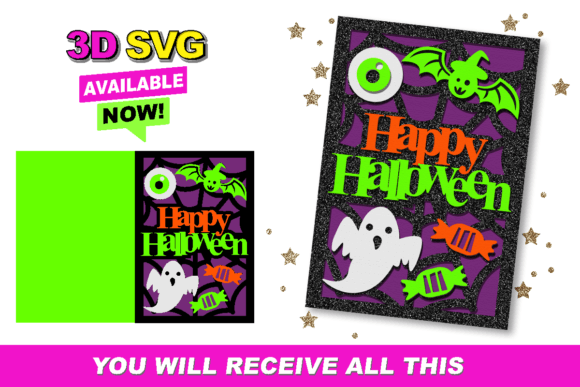
Streamlining Your Halloween Craft Workflow with a 3D SVG Happy Halloween Card
Integrating seasonal projects into a busy professional or creative schedule requires more than just enthusiasm; it demands a streamlined workflow that minimizes friction and maximizes output quality. For creators, small business owners, and hobbyists alike, the Happy Halloween Card represents more than a simple greeting. It is a tangible asset within a broader production pipeline, whether you are manufacturing inventory for an Etsy shop, preparing classroom materials for educators, or executing a personalized marketing campaign for local clients. The efficiency of this process often hinges on the quality and compatibility of the digital assets used at the very beginning of the chain.
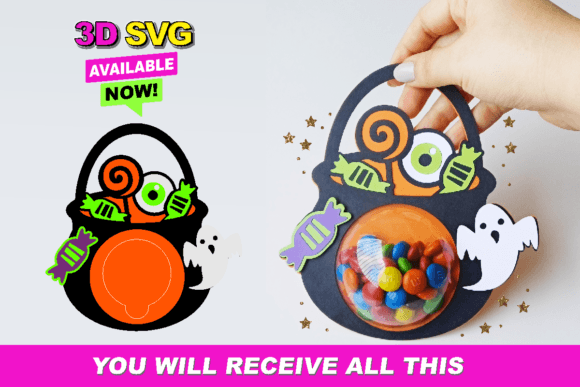
When approaching a project centered around a Happy Halloween Card, the foundational step involves securing a file format that offers flexibility across different stages of production. The specific asset discussed here—a 3D SVG contained within a zipped folder—serves as a critical component in this ecosystem. Unlike static raster images, Scalable Vector Graphics (SVG) provide the mathematical precision required for cutting machines to interpret paths accurately. This distinction is vital for anyone utilizing software like Silhouette Studio or Cricut Design Space, where clean cut lines determine the structural integrity of the final 3D pop-up effect.
Pre-Production Planning and File Compatibility
Before any material is loaded into a machine, the planning phase dictates the success of the execution. Downloading the Happy Halloween Card design in a zipped folder is a standard practice for maintaining organized digital assets. Upon extraction, the user is presented with an SVG file optimized for layering. This stage is crucial for verifying compatibility. While the design is explicitly engineered for Silhouette and Cricut platforms, users operating alternative machinery must conduct a preliminary audit of their software's import capabilities.
Compatibility checks prevent wasted time and material later in the process. If your workflow relies on a Brother ScanNCut, a Glowforge laser cutter, or a specialized industrial die-cutter, confirming that the software can parse the specific SVG nodes is essential. Some older software versions may struggle with complex 3D layering paths, requiring the user to ungroup elements or simplify curves before cutting. By addressing these technical requirements during the preparation phase, you ensure that the transition from digital file to physical prototype remains seamless. This proactive approach aligns with best practices for quality control, reducing the likelihood of mid-production errors that can derail tight deadlines.
Optimizing the Design for Cutting Software
Once the file is imported into your preferred environment, such as Cricut Design Space or Silhouette Studio, the real work of customization begins. The beauty of the Happy Halloween Card SVG lies in its modularity. Because it is a vector file, every element—from the spooky typography to the intricate background details—can be resized without losing resolution. This scalability is particularly beneficial for entrepreneurs who need to adapt a single design for various product formats, such as standard A2 greeting cards, larger poster inserts, or even vinyl decals for seasonal packaging.
In Silhouette Studio, users should pay close attention to the "Cut Style" settings. To achieve the intended 3D effect, certain lines must be set to "Cut" while others might need to be designated as "Draw" or "Perforate," depending on the desired fold mechanics. The 3D nature of this card implies that multiple layers will interact physically. Therefore, precise alignment during the digital setup phase is non-negotiable. Misaligned registration marks can result in layers that do not stack correctly, compromising the pop-up mechanism. Taking the time to utilize the software's alignment tools and preview modes ensures that the physical assembly will match the digital vision.
Material Selection and Execution Strategies
The choice of substrate plays a pivotal role in the functionality of a 3D card. Standard copy paper often lacks the rigidity required to support pop-up elements, leading to sagging or collapse over time. Conversely, cardstock that is too heavy may strain the hinge points, causing the mechanism to tear upon opening. For optimal results, professionals recommend using cardstock in the range of 65 to 80 lbs. This weight provides enough structure to hold the 3D form while remaining flexible enough for repeated folding.
During the cutting process, monitoring blade depth and pressure is essential. Since the Happy Halloween Card likely features fine details and varying line densities, a test cut on a scrap piece of your chosen material is a prudent step. This small investment of time validates your machine settings and prevents the ruin of an entire batch of premium cardstock. For those running high-volume operations, such as fulfilling bulk orders for corporate events or school fundraisers, establishing a consistent cutting protocol based on these initial tests ensures uniformity across all units.
- Weeding and Cleanup: After cutting, carefully remove excess material. Fine details in Halloween themes, such as spiderwebs or bat wings, require patience and precision tools to avoid tearing delicate connections.
- Scoring: If your machine supports a scoring tool, use it for fold lines. A crisp score line guarantees a professional finish and makes the assembly process significantly faster for manual laborers or volunteers.
- Layering: Assemble the 3D components in a clean, dry environment. Use acid-free adhesive to prevent yellowing over time, ensuring the longevity of the card as a keepsake.
Integration into Broader Business and Creative Workflows
For freelancers and small business owners, the Happy Halloween Card is rarely an isolated task; it is part of a seasonal revenue stream or a client retention strategy. Integrating this asset into a larger workflow involves synchronizing the production timeline with shipping schedules and marketing campaigns. If you are a marketer, these cards can serve as direct mail pieces included in October subscription boxes, adding a personal touch that enhances brand loyalty. In this context, the ease of cutting the SVG directly translates to lower labor costs and higher throughput.
Educators can also leverage this resource effectively. By downloading the zipped folder once, a teacher can produce dozens of unique cards for students or use the design as a template for a classroom STEM activity focused on engineering and paper mechanics. The repeatability of the digital file allows for consistent instruction, while the open nature of the SVG format encourages students to modify colors or add their own graphical elements, fostering creativity within a structured framework.
Quality Control and Long-Term Asset Management
Maintaining a library of usable digital assets is a key habit for productive creators. The Happy Halloween Card SVG, once downloaded and tested, becomes a permanent part of your resource repository. Proper file management—keeping the original zipped folder intact alongside a working copy—ensures that you can revisit the project in future years without searching for broken links or outdated versions. This organizational discipline supports long-term efficiency, allowing you to pivot quickly when seasonal demand arises.
Furthermore, analyzing the performance of these cards post-distribution provides valuable data. Did the 3D mechanism hold up during mailing? Did recipients engage with the interactive element? Feedback loops like these inform future material choices and design tweaks. Perhaps next year, a slightly heavier stock is needed, or a different adhesive application method would improve durability. This iterative process turns a simple craft project into a refined business operation.
Ultimately, the value of this Happy Halloween Card extends beyond the holiday itself. It serves as a case study in how high-quality, compatible digital files can streamline physical production. Whether you are a solo entrepreneur managing every aspect of your shop or a coordinator organizing a community event, the principles of preparation, compatibility verification, and systematic execution remain constant. By treating the download and implementation of this 3D SVG with the same rigor applied to core business processes, you ensure a professional outcome that resonates with your audience and stands up to the demands of real-world use.
As you move forward with your seasonal projects, remember that the tools you choose define the ceiling of your potential output. A well-constructed SVG file removes technical barriers, allowing you to focus on the creative and strategic aspects of your work. Embrace the precision that vector graphics offer, respect the nuances of your cutting machinery, and integrate these assets thoughtfully into your routine. The result is not just a card, but a testament to efficient, thoughtful creation.