Unlocking Creativity: The Ultimate Guide to Groovy Daisy 3D Birthday Cards
Celebrating a birthday is more than just marking another year; it is an opportunity to connect, express love, and create lasting memories. In an era dominated by digital notifications and fleeting social media posts, the tangible impact of a handmade card holds a unique significance. Among the myriad of design trends capturing the hearts of crafters today, the Happy Birthday Card Groovy Daisy stands out as a vibrant fusion of nostalgia and modern technology. This article explores the world of 3D SVG cut files, specifically focusing on this charming floral design, and guides you through understanding its purpose, technical requirements, and creative potential.
The Renaissance of Handmade Greetings
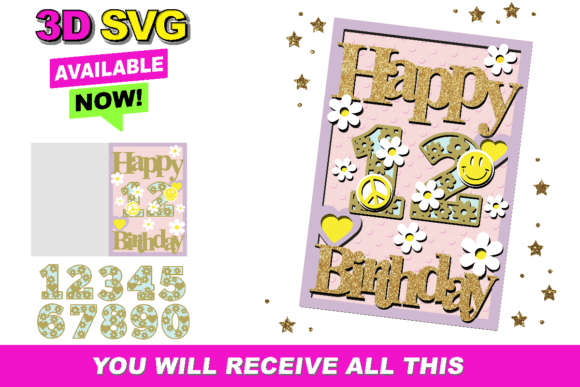
Why do we still make cards when we can send an e-card in seconds? The answer lies in the effort. A physical card demonstrates time, thought, and personalization. The "Groovy Daisy" aesthetic taps into the popular retro-modern style, characterized by bold outlines, cheerful colors, and a playful vibe that appeals to all ages. When this style is translated into a 3D layered design, it elevates a simple greeting into a piece of art.
These designs are not merely flat images; they are engineered experiences. By layering different cuts of cardstock, creators add depth and shadow, making the daisies appear to pop off the page. This tactile element engages the recipient in a way that a screen never can. Whether for a child's party, a milestone birthday, or a casual "thinking of you," the significance of such a card extends beyond the message written inside—it becomes a keepsake.
Understanding the Technology: What is a 3D SVG?
To fully appreciate the Happy Birthday Card Groovy Daisy design, one must understand the file format that powers it: the SVG, or Scalable Vector Graphic. Unlike standard image files (like JPEGs or PNGs) which are made of pixels and can become blurry when enlarged, SVGs are based on mathematical paths. This means they can be scaled up or down infinitely without losing quality—a crucial feature for cutting machines.
A 3D SVG is a specific type of vector file designed with multiple layers in mind. Instead of a single outline, the file contains several distinct paths that correspond to different layers of paper. When assembled, these layers create shadows and dimension. For beginners, this might sound complex, but the process is streamlined by modern software. The file acts as a blueprint, telling your machine exactly where to cut so that every petal and leaf aligns perfectly during assembly.
Compatibility with Cutting Machines
One of the most common questions among new crafters is about machine compatibility. The beauty of the SVG format is its universality, but how you use it depends on your hardware.
- Silhouette Studio: Users of Silhouette Cameo or Portrait machines will find these files native to their ecosystem. The software allows for easy manipulation of the layers, letting you adjust cut settings for different paper weights.
- Cricut Design Space: Similarly, Cricut users can upload these SVGs directly into Design Space. The software automatically recognizes the layers, allowing you to assign different colors to each layer for visual guidance before cutting.
- Other Machines: If you are using a Brother ScanNCut, Sizzix Eclipse, or even a laser cutter, the principle remains the same. However, you must ensure your specific machine's software can import and interpret SVG files. Some older or proprietary systems may require a conversion step, though this is increasingly rare.
Note: Always verify your machine's specifications. While the design is versatile, the ability to read the file is the first step to success.
The Practical Workflow: From Download to Delivery
Acquiring a design like the Groovy Daisy is often the easiest part of the journey. These designs typically come in a zipped folder. For those unfamiliar, a zip file is simply a compressed archive that keeps all the necessary components together. Inside, you will usually find the SVG file, and sometimes additional formats like DXF or PNG for reference.
Here is a logical flow to transform this digital file into a physical masterpiece:
- Download and Extract: Save the zipped folder to your computer and extract the contents. Locate the .svg file.
- Import to Software: Open your preferred design software (Silhouette Studio or Cricut Design Space) and import the SVG.
- Prepare the Layers: This is where the magic happens. You will see multiple copies of the daisy shape. Assign different colors to each layer to represent the cardstock you plan to use. Typically, the bottom layer is the largest, and subsequent layers get slightly smaller to create the 3D effect.
- Material Selection: Choose high-quality cardstock. For a sturdy 3D card, 65lb to 80lb cardstock is ideal. It holds its shape well without being too thick for the machine to cut intricate details.
- Cutting: Load your mat and send the job to your machine. Ensure your blade is sharp; dull blades can tear the delicate edges of the daisy petals.
- Assembly: Once cut, peel away the excess material (weeding). Use foam adhesive squares or liquid glue to stack the layers. Start from the largest layer at the bottom and work your way up.
Common Misunderstandings and Tips for Success
A frequent assumption is that 3D cards are fragile. While they do require careful handling, using the right adhesive ensures durability. Foam tape is highly recommended over liquid glue for the main layers, as it provides the necessary lift to cast shadows, enhancing the 3D illusion. Another misconception is that you need expensive equipment. While professional machines offer speed and precision, many hobbyists achieve stunning results with entry-level models by taking their time and adjusting pressure settings.
Furthermore, some users worry about color matching. Remember, the SVG file is just a template. You have complete creative freedom. The "Groovy Daisy" might traditionally be yellow and orange, but why not try a monochromatic blue scheme for a cool-toned birthday, or pastels for a baby shower? The design is a vessel for your personal expression.
The Broader Impact: Creativity in Modern Life
Engaging with projects like the Happy Birthday Card Groovy Daisy is more than a hobby; it is a form of mindfulness. In our fast-paced digital lives, the act of cutting, weeding, and gluing forces us to slow down and focus on the present moment. This practice fosters patience and attention to detail, skills that are transferable to business, education, and daily problem-solving.
For educators and parents, these projects serve as excellent tools for teaching spatial reasoning and following sequential instructions. For small business owners, mastering 3D SVG designs opens doors to selling handmade goods on platforms like Etsy, turning a creative passion into a revenue stream. The accessibility of these files democratizes design, allowing anyone with a cutting machine to produce professional-grade stationery.
In conclusion, the Groovy Daisy 3D Birthday Card represents the perfect intersection of retro charm and modern convenience. It invites us to reconnect with the art of giving, proving that a little bit of paper, a digital file, and a touch of creativity can make someone's day truly special. Whether you are a seasoned crafter or picking up a cutting mat for the first time, this design offers a delightful pathway to expressing joy in three dimensions.