Unlocking Architectural Elegance with Abstract of Balustrade Pattern Set 8
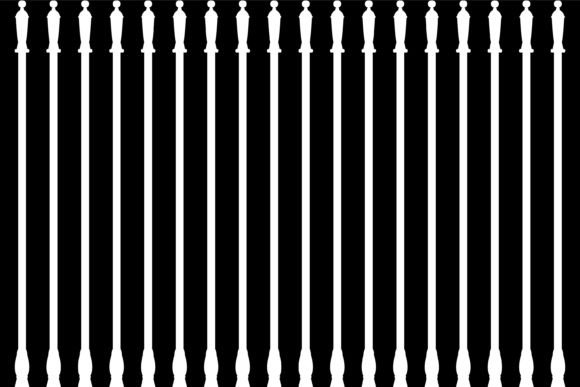
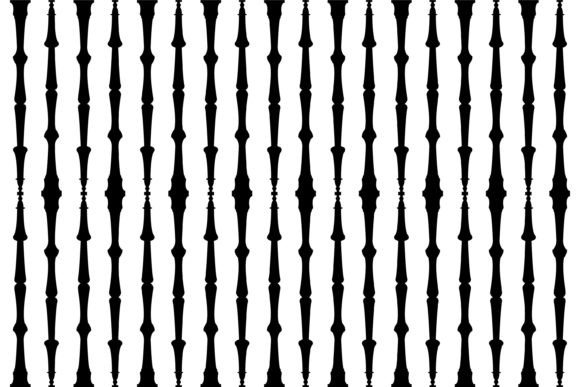
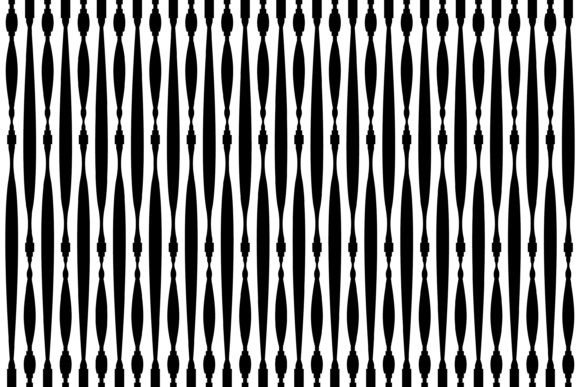
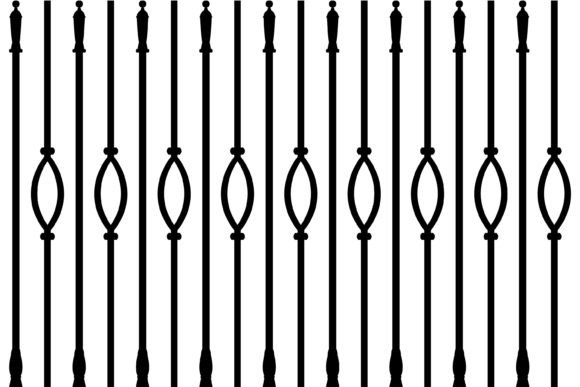
There is a specific kind of satisfaction that comes from finding the perfect architectural detail to anchor a design project. It's that moment when a flat rendering suddenly gains depth, or a blank textile swatch transforms into something with history and texture. This is exactly where the Abstract of Balustrade Pattern Set 8 shines. At its core, this collection offers a series of European-style lines rendered in stark black on a white background. While the description sounds simple—isolated objects ready for print—the utility of these vector patterns extends far beyond a basic clipart library. They serve as a versatile bridge between classical architecture and modern digital application, offering designers, architects, and creatives a toolset that feels both timeless and immediately usable.
When you look at these patterns, you aren't just seeing railings; you are seeing rhythm. The European influence brings a certain gravitas, often characterized by repeating verticals, ornate scrolls, or geometric precision that mimics wrought iron or carved stone. Because these designs are provided as isolated concepts, they strip away the noise of a full photograph, leaving you with the pure essence of the form. This makes them incredibly adaptable for scenarios where clarity and style need to coexist without fighting for attention.
Real-World Applications Across Industries
The true value of any design asset lies in how it solves problems in the real world. For interior designers working on high-end residential projects, Abstract of Balustrade Pattern Set 8 can be a game-changer during the client presentation phase. Imagine trying to explain a custom staircase concept to a client who struggles to visualize 3D space from a sketch. By incorporating these black-and-white vector lines into your mood boards or digital renderings, you provide a clear visual language. You can overlay these patterns onto photos of existing spaces to simulate how a new balustrade might look, or use them as texture maps in 3D software to give a generic model an instant dose of realism.
In the realm of textile and surface design, the potential is equally vast. The high-contrast nature of black lines on a white background makes these patterns ideal for screen printing, digital fabric printing, and even wallpaper production. A fashion designer looking to add a structural element to a summer dress could use these motifs to create a border print that echoes architectural strength. Similarly, a home decor brand could apply these vectors to ceramic tiles or throw pillows, tapping into the current trend of "architectural chic" in home furnishings. The isolation of the objects means you aren't stuck with a seamless repeat if you don't want to be; you can pick and choose specific elements to create bespoke compositions that feel curated rather than manufactured.
Graphic designers and branding experts also find a unique niche for these assets. Consider a boutique hotel or a heritage site looking to rebrand. Their identity needs to communicate stability, elegance, and a connection to place. Using elements from Abstract of Balustrade Pattern Set 8 in their stationery, packaging, or website backgrounds can subtly convey these values. The lines act as a visual metaphor for safety, boundary, and guidance—core concepts in hospitality. Furthermore, because the files are vector-based, they scale infinitely without losing quality, ensuring that the logo on a business card looks just as crisp as the backdrop on a highway billboard.
Navigating the Creative Process with Vector Assets
Working with isolated vector art requires a slightly different mindset than working with raster images or photographs. One of the primary strengths of this pattern set is its editability. Since the lines are defined by mathematical paths rather than pixels, you have the freedom to manipulate stroke weights, adjust curves, or even deconstruct the patterns to build something entirely new. This is particularly useful for architects who might need to adapt a standard European motif to fit a non-standard measurement or a specific local building code aesthetic. You can take a segment of the balustrade, stretch it, mirror it, or simplify it to match the minimalism of a contemporary build while retaining a hint of classical soul.
However, there are considerations to keep in mind before diving in. The stark black-on-white aesthetic is powerful, but it demands confidence. In some contexts, such as a busy web interface or a cluttered packaging design, adding strong linear elements can create visual noise if not balanced correctly. It is often wise to experiment with opacity or blending modes when integrating these patterns into complex scenes. For instance, using the pattern as a subtle watermark at 10% opacity can add texture to a document without overwhelming the text. Alternatively, inverting the colors to white lines on a dark background can create a dramatic, nightlife-ready vibe suitable for event invitations or luxury product launches.
Another practical observation involves the "European style" descriptor. While this suggests a certain aesthetic, it is broad enough to encompass everything from French Ironwork to Italian Renaissance stone. When selecting specific elements from Set 8, pay close attention to the detailing. Some patterns may feature heavy, ornate scrolls that suit traditional or vintage projects, while others might offer cleaner, more geometric lines better suited for transitional styles. Understanding the specific historical nuance of the line work helps ensure that your final output feels authentic rather than pastiche.
Enhancing Digital and Physical Renderings
For those working in 3D rendering and visualization, texture is everything. A common pitfall in digital architecture is the "too perfect" look, where surfaces appear sterile and lifeless. Integrating Abstract of Balustrade Pattern Set 8 as a displacement map or a decal can break up large expanses of plain material. If you are rendering a balcony scene, applying these vector patterns to the railing geometry adds immediate recognition and scale. Viewers instinctively understand the function of a balustrade, so seeing that detail renders the entire scene more believable.
Beyond 3D, these patterns excel in 2D illustration and technical drawing. Architects and engineers often need to denote barriers or boundaries in site plans without cluttering the drawing with photorealistic details. These isolated vector objects serve as perfect schematic symbols. They communicate the presence of a safety barrier clearly while maintaining the clean, professional look of a technical document. This dual capability—serving both artistic illustration and technical documentation—makes the set a highly efficient resource for firms that wear multiple hats.
Ultimately, the decision to use a specific pattern set comes down to the story you want your design to tell. Abstract of Balustrade Pattern Set 8 tells a story of structure, elegance, and enduring design. Whether you are printing it on linen, projecting it onto a building facade, or using it to define a digital user interface, the underlying geometry provides a solid foundation. The key is to approach these assets not just as decorative fillers, but as structural components of your broader creative vision. By respecting the lineage of the European styles they emulate and leveraging the flexibility of modern vector technology, you can create work that feels both grounded in tradition and excitingly fresh.