Evaluating the Practical Value of Abstract Balustrade Pattern Set 11 for Design Workflows
In the realm of digital design and architectural visualization, the distinction between a generic texture and a purposeful asset often lies in the precision of its lines and the flexibility of its application. The Abstract of Balustrade Pattern Set 11 represents a specific category of vector resources designed to bridge the gap between classical European aesthetics and modern digital production. For professionals ranging from graphic designers to interior architects, understanding the utility of such isolated pattern sets is crucial for maintaining efficiency without compromising on stylistic integrity.
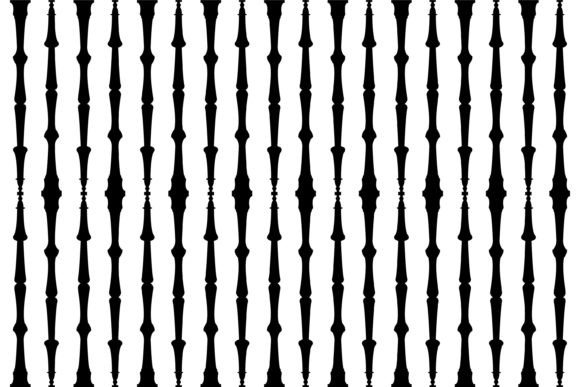
This collection focuses on European-style lines rendered in high-contrast black on a white background. While this may sound like a simple description, the implications for workflow are significant. By isolating these ornamental elements, the set removes the noise often found in photographic textures or low-resolution scans, providing a clean slate for integration into diverse projects. Whether used for textile printing, 3D rendering backdrops, or illustrative overlays, the value proposition centers on clarity and adaptability.
The Architecture of Clean Lines and Vector Precision
The core strength of Abstract of Balustrade Pattern Set 11 lies in its vector foundation. Unlike raster images that degrade when scaled, vector graphics maintain crisp edges regardless of size. This is particularly important for balustrade patterns, which often feature intricate scrollwork, repetitive geometric motifs, and fine detailing characteristic of European design traditions. When these elements are reduced to black lines on a white field, the focus shifts entirely to the form and rhythm of the pattern.
For creators working on large-format prints, such as wallpaper rolls or fabric bolts, this scalability is non-negotiable. A pixelated edge can ruin the illusion of quality in a luxury interior mockup. The isolated nature of these objects means they are not bound by a fixed canvas size or background color. Designers can easily invert the colors, placing white lines on dark backgrounds, or integrate them into complex compositions where the balustrade acts as a subtle watermark or a dominant structural element.
Furthermore, the "abstract" designation suggests a departure from strict historical replication. Instead, these patterns likely distill the essence of classical railings and barriers into stylized forms. This abstraction allows for broader application; the pattern does not need to represent a literal balcony to function effectively as a decorative border or a textural fill in a branding project.
Versatility Across Digital and Physical Mediums
The practical application of this pattern set extends far beyond simple illustration. Its utility spans several industries, each with unique requirements for texture and ornamentation.
- Textile and Surface Design: Fashion and home decor professionals often seek motifs that repeat seamlessly. The linear nature of European balustrade designs translates well onto fabrics, creating elegant borders for curtains or all-over prints for upholstery. The high contrast ensures the pattern remains visible even when dyed or printed on textured materials.
- Architectural Rendering and 3D Visualization: In 3D modeling, applying a flat image to a curved surface can result in distortion. Vector-based patterns can often be mapped more effectively or used as displacement maps to create actual geometric depth on a railing model. Using these isolated elements as backdrops in renderings adds a layer of sophistication without cluttering the scene.
- Packaging and Branding: Luxury brands frequently utilize classical motifs to convey heritage and stability. Incorporating a refined balustrade pattern into packaging design—perhaps as a foil stamp or an embossed detail—can elevate the perceived value of a product. The isolated format allows designers to crop and arrange specific sections of the pattern to fit unique die-lines.
- Digital Backgrounds and UI Elements: For web designers and app developers, subtle textures can break up large areas of solid color. A faint, low-opacity version of these black lines can provide a sophisticated grid or boundary effect in user interfaces, particularly for platforms related to real estate, law, or high-end retail.
Workflow Efficiency and Integration
Time is a critical resource for freelancers and agencies. Sourcing high-quality assets that require minimal cleanup is a strategic advantage. Many free or low-cost resources available online come with artifacts, inconsistent line weights, or backgrounds that are difficult to remove. Abstract of Balustrade Pattern Set 11 addresses this by offering pre-isolated objects. This readiness means a designer can import the file and immediately begin manipulating it within software like Adobe Illustrator, CorelDRAW, or Affinity Designer.
The consistency of the line work is another factor that aids workflow. When building a cohesive visual identity, having a set of patterns that share the same stroke width and stylistic language ensures that different elements of a project feel unified. Whether applying the pattern to a business card or a website header, the visual thread remains unbroken. This reliability reduces the time spent tweaking individual vectors to match one another.
Moreover, the black-on-white presentation serves as a universal starting point. It aligns with standard printing protocols where black ink is distinct and predictable. For digital artists, this high contrast makes selection tools more effective if further editing is required, although the intent of a true vector set is to minimize the need for such manual intervention.
Assessing Limitations and Contextual Fit
While the advantages are clear, it is important to approach this asset with a realistic understanding of its limitations. The abstract, linear style may not suit projects requiring photorealism or organic, hand-drawn aesthetics. If a project demands the warmth of sketched charcoal or the irregularity of watercolor, a rigid vector balustrade might feel too sterile or mechanical. In such cases, additional texturing or blending modes would be necessary to soften the edges and integrate the pattern naturally.
Additionally, the "European style" descriptor implies a specific cultural and historical vocabulary. While versatile, these motifs carry connotations of tradition, formality, and classicism. They may clash with brands aiming for a futuristic, minimalist, or avant-garde look unless used ironically or deconstructed significantly. Designers must evaluate whether the inherent personality of the balustrade pattern aligns with the emotional tone of their specific campaign or product.
There is also the consideration of overuse. Classical patterns are popular for a reason, but their ubiquity can lead to a lack of differentiation. To maintain originality, professionals should consider modifying the scale, rotation, or density of the pattern rather than applying it out of the box. Combining elements from Set 11 with other graphical components can create a hybrid style that feels fresh while retaining the structural elegance of the original source.
Long-Term Value for Creative Professionals
Investing in a specialized resource like Abstract of Balustrade Pattern Set 11 is less about a single project and more about building a robust personal library. Over time, having a go-to collection of reliable ornaments saves hours of searching and drafting. For educators and publishers, these assets provide consistent visual aids for teaching design principles or illustrating historical concepts without copyright ambiguity.
The durability of vector formats ensures that these files remain usable regardless of technological shifts in resolution standards. As display screens become sharper and print techniques more advanced, the mathematical precision of vectors ensures the artwork does not become obsolete. This longevity contributes to a higher return on investment for the creator, as the asset can be deployed repeatedly across years of varying client demands.
Ultimately, the decision to utilize this pattern set depends on the specific needs of the project at hand. For those seeking to inject a sense of order, heritage, and refined detail into their work, the clean lines and isolated nature of these balustrade designs offer a powerful tool. They serve not just as decoration, but as structural elements that can define space, guide the eye, and add a layer of professional polish to both digital and physical outputs.
In conclusion, while no single asset can solve every design challenge, the Abstract of Balustrade Pattern Set 11 stands out for its clarity, scalability, and broad applicability. It respects the intelligence of the designer by providing raw, high-quality material that invites customization rather than dictating a final look. For the discerning professional, it represents a pragmatic choice in a market often saturated with mediocre graphics.