Strategic Deployment of the Candy Holder Princess Castle for Brand Engagement and Event Planning
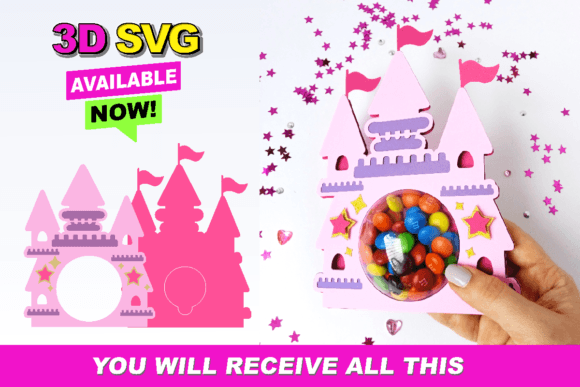
In the landscape of event planning, small business branding, and creative education, the difference between a forgettable interaction and a memorable experience often lies in the details. The Candy Holder Princess Castle represents more than a whimsical decorative item; it is a tangible asset that, when deployed with intention, can significantly enhance customer experience, reinforce thematic branding, and streamline operational workflows for creators. This 3D SVG design, optimized for cutting machines like Silhouette Studio and Cricut Design Space, offers a versatile foundation for professionals seeking to elevate their output without compromising on efficiency or quality.
For entrepreneurs and marketers, the decision to integrate such specific assets into a broader strategy requires a clear understanding of value proposition. A candy holder shaped like a princess castle is not merely a container for confectionery; it is a communication tool. It signals attention to detail, thematic consistency, and a commitment to delighting the end-user. Whether you are organizing a high-end children's birthday party, managing a boutique bakery's packaging, or developing curriculum for a vocational crafting course, the strategic application of this design can yield measurable improvements in engagement and perceived value.
Aligning Design Assets with Strategic Goals
The primary utility of the Candy Holder Princess Castle extends beyond its aesthetic appeal. In a professional context, every physical touchpoint contributes to the overall narrative of a brand or event. When a guest receives a treat housed in a meticulously cut, three-dimensional castle, the message conveyed is one of care and precision. This aligns directly with goals related to brand positioning and customer retention. For small business owners, particularly those in the event services or custom gifting sectors, offering a unique, structurally sound, and visually striking delivery method for products can justify premium pricing and foster word-of-mouth marketing.
From an operational standpoint, utilizing a pre-designed SVG file included in a zipped folder streamlines the production process. Time is a critical resource for freelancers and agency owners. By leveraging a file that is already engineered for compatibility with industry-standard software, practitioners eliminate the hours typically spent on vector drafting and structural testing. This allows teams to reallocate resources toward client communication, marketing strategies, or scaling production volumes. The ease of cutting this 3D SVG ensures that even during peak seasons, output quality remains consistent, reducing waste and minimizing the risk of mechanical errors during the fabrication phase.
Optimizing Production Workflows
Efficiency in creation is paramount for maintaining profitability. The Candy Holder Princess Castle file is designed to be intuitive, allowing users to import it directly into Silhouette Studio or Cricut Design Space with minimal friction. However, strategic foresight is required before the cutting begins. Professionals should consider the material selection as a key variable in the final outcome. While cardstock is the standard medium, the choice of weight, texture, and finish can dramatically alter the perceived luxury of the final product. A matte finish might suit a vintage-themed wedding, while a metallic foil could elevate a corporate holiday gala.
Furthermore, understanding the limitations and capabilities of your specific machinery is essential. Although the file is optimized for major platforms, users operating alternative cutting systems must verify file compatibility beforehand. This due diligence prevents workflow interruptions and ensures that the structural integrity of the castle—critical for holding weight without collapsing—is maintained. A thoughtful approach involves running test cuts on scrap material to fine-tune pressure and blade depth settings, ensuring that the intricate details of the castle turrets and windows are rendered cleanly. This level of preparation reflects a mature operational mindset where quality control is proactive rather than reactive.
Enhancing Customer Experience and Thematic Consistency
In the realm of experiential marketing and event design, cohesion is king. The Candy Holder Princess Castle serves as a pivotal element in creating an immersive environment. For educators teaching design principles or event management, this object provides a practical case study in how form follows function. It demonstrates to students or clients how a simple object can be transformed into a narrative device. When used in a classroom setting, it encourages learners to think critically about spatial reasoning, assembly logic, and the psychological impact of design choices on the user.
For publishers and bloggers focusing on lifestyle or DIY niches, featuring projects involving this candy holder can drive significant engagement. Content that offers actionable, high-quality templates tends to perform better in search rankings and social shares because it provides immediate utility to the reader. By guiding the audience through the process of assembling and customizing the castle, creators establish authority and trust. This fosters a community of practice where users feel supported in their creative endeavors, leading to higher loyalty and repeat visits to the platform.
Risk Mitigation and Contextual Awareness
Despite its advantages, relying on any single design asset without a broader strategic framework carries risks. Deploying the Candy Holder Princess Castle in a context where it clashes with the brand identity or event theme can create cognitive dissonance for the audience. For instance, using a whimsical princess motif in a严肃 (serious) corporate financial seminar would undermine professional credibility. Therefore, decision-makers must evaluate the contextual fit before committing to production. The goal is intentional usage, not random decoration.
Another potential pitfall is overlooking the functional requirements of the end-user. If the candy holder is intended for a specific type of treat that exceeds the weight capacity of the chosen material, the structural failure of the castle could lead to a negative customer experience. Strategic planning involves anticipating these scenarios. Professionals should consider reinforcing joints, selecting heavier gauge materials, or modifying the design slightly to accommodate heavier loads if necessary. This proactive problem-solving distinguishes experienced practitioners from amateurs.
Long-Term Value and Scalability
The true measure of a design asset's worth is its longevity and adaptability. The Candy Holder Princess Castle offers long-term value because it is not tied to a fleeting trend but rather to a timeless archetype—the castle—which resonates across generations. This makes it a sustainable investment for businesses looking to build a library of reusable assets. Unlike seasonal items that become obsolete after a few weeks, a well-executed castle design can be repurposed for various occasions, from birthdays to theatrical productions, simply by changing the color palette or accompanying signage.
Scalability is another crucial consideration. As demand grows, the digital nature of the SVG file allows for unlimited reproduction without degradation in quality. For entrepreneurs, this means the marginal cost of producing each additional unit decreases significantly, improving profit margins. However, scaling also requires robust inventory management and quality assurance protocols. Ensuring that every unit cut from the file meets the same high standards is essential for maintaining brand reputation as volume increases.
Decision-Making Framework for Implementation
To maximize the return on investment when using the Candy Holder Princess Castle, professionals should adopt a structured decision-making framework:
- Audit Alignment: Does this design align with current brand guidelines or event themes?
- Resource Assessment: Do we have the appropriate materials and machine settings to execute this design flawlessly?
- User Journey Mapping: How will the recipient interact with this object? Will it enhance their experience or serve as a hindrance?
- Cost-Benefit Analysis: Does the time and material cost justify the perceived value added to the final product?
- Feedback Loop: How will we gather data on the effectiveness of this design to inform future iterations?
By systematically addressing these questions, creators and business owners move away from impulsive crafting toward strategic production. This shift not only improves immediate outcomes but also builds a foundation for sustained success. The Candy Holder Princess Castle becomes more than a project; it becomes a component of a larger, well-oiled machine dedicated to excellence.
Ultimately, the integration of digital design files like this 3D SVG into physical products bridges the gap between virtual planning and tangible reality. It empowers individuals to manifest their visions with precision and speed. Whether you are a solo entrepreneur looking to differentiate your offerings or a large organization aiming to standardize high-quality deliverables, the thoughtful application of such tools is a hallmark of professional maturity. The focus should always remain on the outcome: creating meaningful, lasting impressions through deliberate, well-executed design.
In conclusion, while the Candy Holder Princess Castle begins as a digital file in a zipped folder, its potential impact is vast and multifaceted. It challenges users to think critically about materials, mechanics, and messaging. By approaching its use with a strategic mindset, prioritizing quality control, and aligning its deployment with clear objectives, professionals can unlock significant value. The path to better results lies not just in having the right tools, but in knowing exactly how and why to use them. Let this design be a catalyst for elevated creativity and operational excellence in your next venture.