Unlock Creative Potential with the Clay Cutter STL File - Succulent Combo 1
There is a specific kind of satisfaction that comes from holding a perfectly formed object in your hand, knowing you created it from raw material. Whether you are rolling out fondant for a wedding cake or pressing polymer clay into a trendy pair of earrings, the difference between a homemade look and a professional finish often lies in the precision of your tools. This is where the Clay Cutter STL File - Succulent Combo 1 changes the game for makers. Instead of waiting for shipping or settling for limited store-bought shapes, this digital bundle puts a versatile succulent garden directly into your workflow, ready to be printed and used immediately.
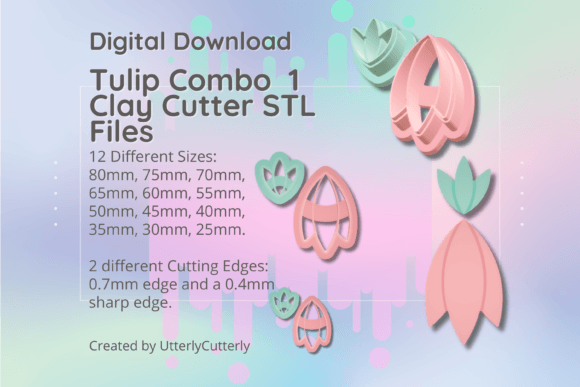
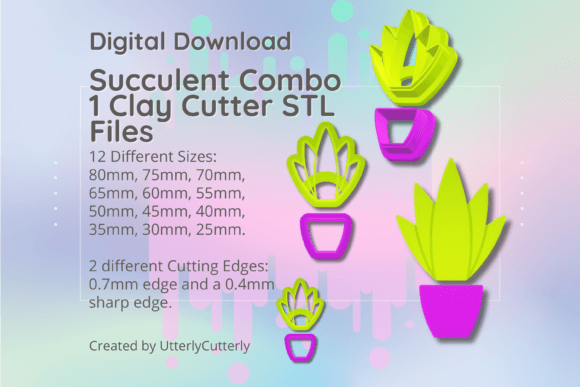
This isn't just a single file; it is a comprehensive toolkit designed for the modern creator who values efficiency and variety. The pack includes two distinct cutting edge styles and twelve different sizes, ranging from a substantial 80mm down to a delicate 25mm. This range allows you to curate custom combos that fit your specific project needs, whether you are crafting a statement necklace or decorating a batch of intricate sugar cookies. Because these are digital downloads, you have the freedom to print replacements if a cutter gets lost or damaged, ensuring your creative process never hits a roadblock due to missing equipment.
From Hobbyist to Small Business: Real-World Applications
The versatility of this succulent combo extends far beyond a single craft. For jewelry makers specializing in polymer clay, the ability to produce consistent shapes is vital for building a cohesive collection. Imagine launching a new line of botanical-themed earrings. With the twelve sizes included in this bundle, you can create matching sets—a large 70mm pendant paired with 40mm drop earrings and tiny 25mm studs. The file offers two cutter types to suit different material densities. The standard version features a 0.7mm wall and a 3mm thick base, ideal for general purpose cutting. However, for those working with softer clays or needing ultra-clean lines, the Sharp Edge (SE) variant provides a 1mm support wall with a razor-thin 0.4mm cutting edge. This attention to detail ensures that your final products look crisp and high-end, a crucial factor when selling on platforms like Etsy or at local craft fairs.
Bakers and cake decorators find equally compelling uses for these files. Fondant and cookie dough behave differently than clay, often requiring specific wall thicknesses to prevent sticking while maintaining shape integrity. The 12mm height of these cutters provides enough depth to cut through thick layers of dough or detailed gum paste without crushing the design. A bakery specializing in custom event cakes could use the 65mm and 60mm cutters to create realistic succulent toppings for rustic wedding cakes, while the smaller 30mm and 35mm sizes work perfectly for cupcake toppers or intricate cookie platters. The fact that you can print these in food-safe filaments (provided you follow proper hygiene protocols) or use them as masters to create silicone molds adds another layer of utility for culinary professionals.
Understanding the Technical Specifications for Better Results
While the creative possibilities are endless, getting the best results starts with understanding the technical design of the Clay Cutter STL File - Succulent Combo 1. These files are engineered to be easily printed on most consumer-grade 3D printers, but knowing the specifics helps in planning your print settings. All cutters share a 3mm thick base and a total height of 12mm. If your design includes embossing lines—those subtle details that add texture to the clay—they stand 10.5mm tall. This means you need to work with clay or fondant that is thicker than 1.5mm to ensure the embossing registers clearly without cutting all the way through.
Choosing between the two cutter types depends largely on your material and desired outcome. The standard 0.7mm wall is robust and great for repeated use in stiffer materials. In contrast, the Sharp Edge (SE) files, identifiable by the "SE" abbreviation in the filenames, are designed for precision. The 0.4mm cutting edge slices through material with minimal resistance, which is particularly helpful when working with delicate fondant that might tear under a thicker blade. When printing, ensure your printer is calibrated to handle these fine details; a nozzle size of 0.4mm is typically recommended to capture the sharpness of the SE variants accurately.
Curating Your Own Design Library
One of the most empowering aspects of owning digital STL files is the ability to build a library that grows with your skills. This succulent combo is just the beginning. With new STL files being added to the store every week, you can expand your repertoire to include complementary shapes, textures, and themes. Perhaps you start with this succulent set for a spring collection, then add cactus designs or floral accents later in the year. Because the sizes are standardized across the range (80mm, 75mm, 70mm, etc.), you can easily mix and match different designs while maintaining size consistency in your products.
For educators and workshop leaders, this bundle offers a practical solution for teaching classes. Instead of purchasing dozens of physical cutters that can get lost or broken, you can print a fresh set for every student or workshop session. The cost per unit drops significantly when you own the digital file, making it an economical choice for community centers, art studios, or baking schools. You can tailor the class experience by printing only the sizes needed for a specific project, reducing waste and clutter in the workspace.
Practical Considerations Before You Print
Before diving into your first print, there are a few practical considerations to keep in mind. First, remember that this is a digital product; you will not receive a physical box in the mail. You need access to a 3D printer or a relationship with a local printing service to bring these files to life. If you are new to 3D printing, don't be intimidated. These files are optimized for ease of printing, meaning they generally require minimal support structures and print reliably on standard PLA or PETG filaments.
Material choice is also critical, especially if you intend to use these cutters for food. Not all 3D printing filaments are food safe, and the layer lines inherent in FDM printing can harbor bacteria. If you plan to use these for cookies or fondant, consider using a food-certified filament and sealing the cutters with a food-safe epoxy, or use the printed cutter to create a mold rather than cutting directly into the food. For clay jewelry, these concerns are moot, and you can focus entirely on durability and print quality.
Ultimately, the Clay Cutter STL File - Succulent Combo 1 represents a shift towards more autonomous and flexible creating. It empowers you to solve problems instantly—if you need a 55mm succulent cutter at 10 PM for a morning deadline, you can print it tonight. It bridges the gap between digital design and tangible art, offering a toolset that adapts to your vision rather than forcing you to adapt to limited store inventory. Whether you are refining your jewelry brand, elevating your baking business, or simply enjoying a weekend craft session, this bundle provides the precision and variety needed to bring your botanical ideas to life.